Case study · 2026 · Side Project
Collective
An art studio discovery portal for artists, and a full art studio management platform for owners.
The problem
Community studios (ceramics, print, wood, photo) juggle memberships, class sign-ups, waivers and door access across a pile of separate tools. If you move to a new town, there's no good way to find one. And the platforms built for this are priced for yoga chains and assume one kind of studio.
Where it started
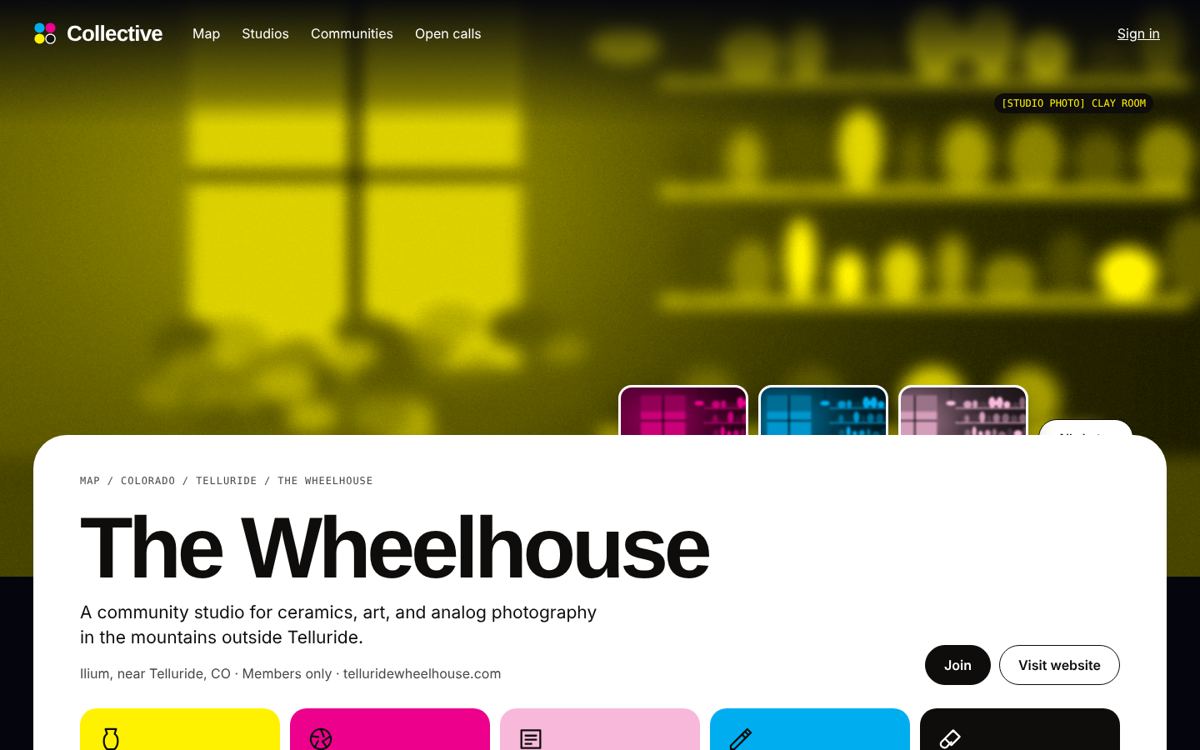
I own a community ceramics studio in Telluride, so I'm the customer here. Running it meant memberships in one tool, class sign-ups in another, waivers on paper and a door lock that didn't know who had paid. Collective is the admin I wanted and the directory I couldn't find. I designed it in Claude Design, then built it with Claude Code from that handoff, and it went from handoff to a production deploy in four days.
What I built
One admin for the whole operation
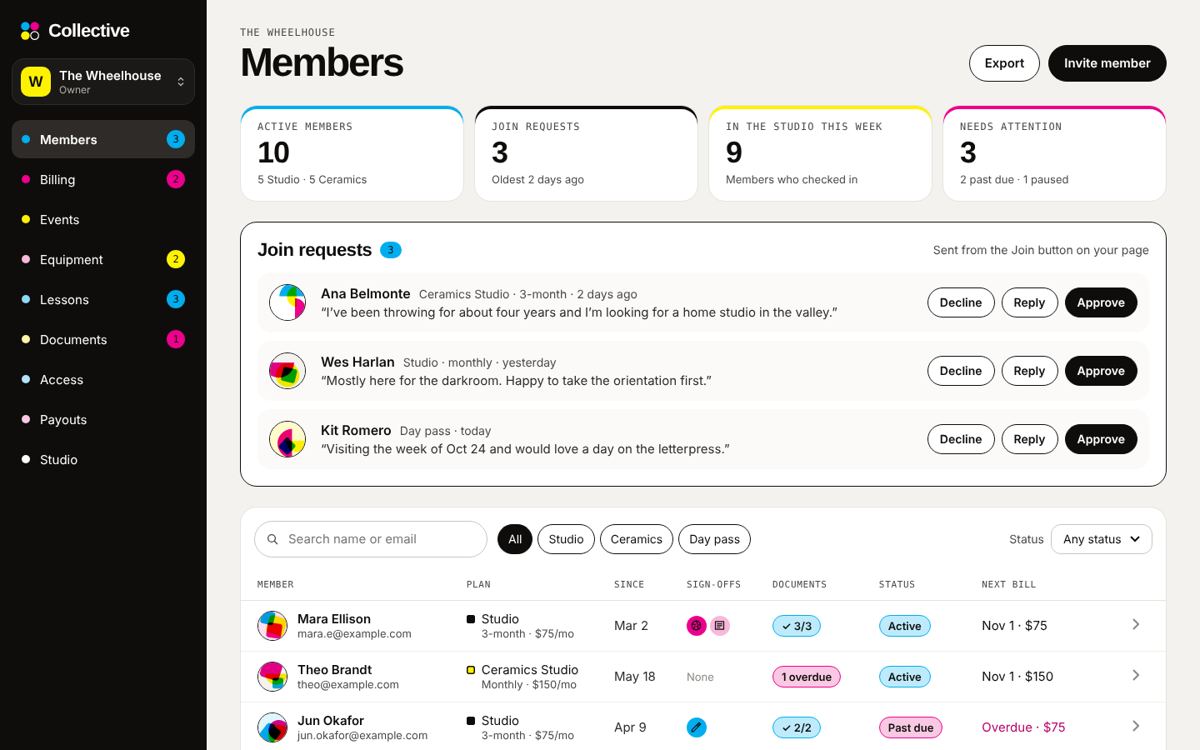
The app is TanStack Start with Drizzle on Postgres. Next.js is a lot of framework for a product that needs almost none of its extras, and TanStack Start gives me typed routes, server functions and the schema in one React codebase. Photos go to Cloudflare R2, email through Resend, SMS through Twilio. The admin covers memberships and billing, classes and events with checkout and waitlists, equipment booking with safety sign-offs, private lesson requests on a drag-select calendar, payouts, and document signing on a self-hosted Documenso. The sign-off model matters in a ceramics studio: you can't book the kiln until the studio has marked you off on it.
Door codes that follow the books
Schlage and Yale smart locks connect through Seam. A member's code is created when their membership starts and turned off automatically when a payment lapses or a required waiver is missing, then restored when they fix it. The studio owner never touches the lock app. This is the feature that made me build the rest.
Money on Stripe Connect
Each studio is a connected account and is paid out directly, with Collective taking 1 percent. Memberships, day passes, classes and lessons charge the card on file. When a card declines, retries and refunds happen in the admin, and the door code follows the payment state above. I chose Connect over a single platform account for the same reason people use Stripe's UI components: the money and the card data never touch Collective's servers, studios are paid by Stripe directly, and payments compliance stays with Stripe rather than with me.
A map of every studio
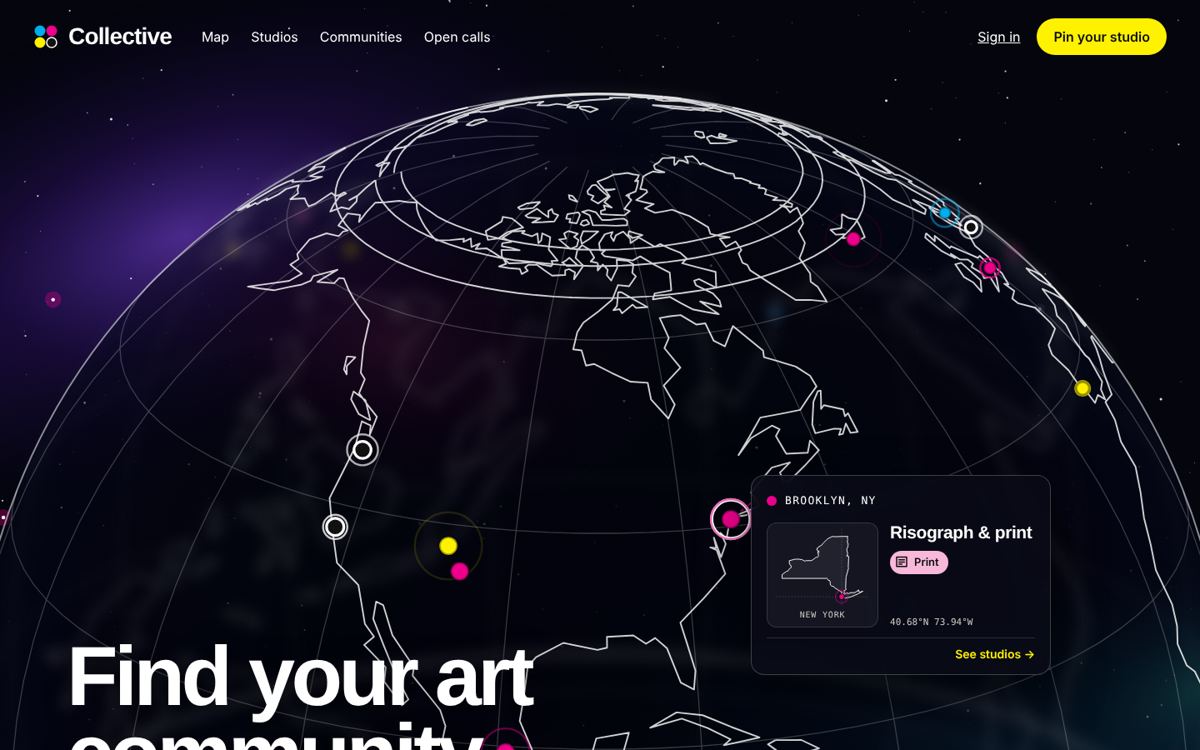
The public side is a slowly turning globe with a pin per listed studio. It is an SVG rather than WebGL: d3-geo's orthographic projection over world-atlas land data, redrawn on a requestAnimationFrame loop as it tours the pins. To seed it I built a research pipeline: Google Places searches by region, Census geocoding to clean the addresses, and Claude checking each candidate to confirm it is a community art studio rather than a gallery or a supply shop. It ran across all fifty states in a day. Verified studios are published; the rest wait for an owner to claim them. Claiming is free and takes a code sent to the studio's email, website domain or phone, and once approved the listing becomes a live studio with plans and spaces.
Members run their own account
A member can pause or cancel, ask for a plan change, update their card, see their charges, set their door code, book equipment and sign waivers, at every studio they belong to, without emailing the owner. My own studio moves onto it first.